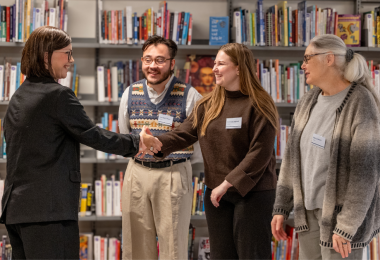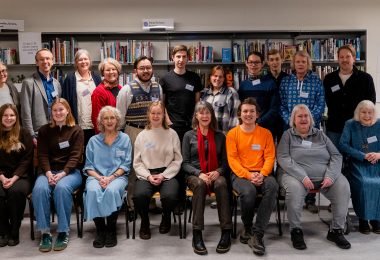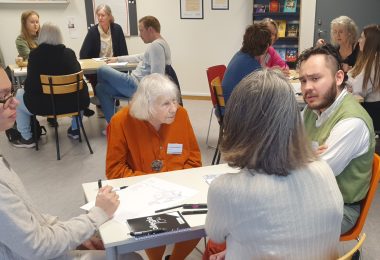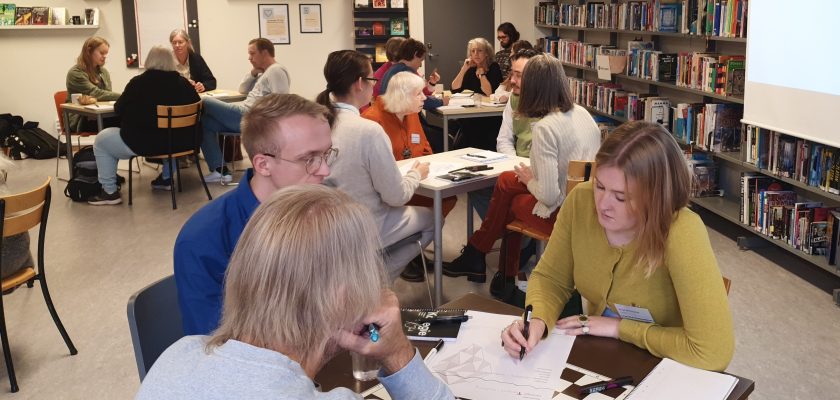
Digidem Lab conducts the climate dialogue in Norra Fäladen.
The climate dialogue in Norra Fäladen in Lund is taking place during the autumn, with a total of four meetings.
What is needed for households in Norra Fäladen to reduce their emissions while still living a good life? That is the key question in the project Ecosocial Neighborhoods, where Digidem Lab is leading a climate dialogue with residents of Norra Fäladen. The project is carried out in collaboration with the City of Lund, Lund University, and the Stockholm Environment Institute.
A project for a just and inclusive climate transition
The project Ecosocial Neighborhoods: Tools for Sustainable Consumption and Inclusive Climate Transition aims to develop methods and tools that help households reduce their consumption-based emissions — without compromising quality of life. A central component of the project is a climate dialogue in Norra Fäladen, where residents themselves propose solutions and recommendations.
The dialogue is based on the citizens’ assembly model and aims to bring together scientific knowledge, practical experience, and local perspectives in a shared conversation process. In September, an invitation was sent out to about 2,000 households. From the applications, a stratified selection process was conducted to ensure accurate representation based on age, gender, education, income level, income type, area of residence, and level of concern about climate change.
Deliberative process in practice
Four dialogue meetings are being held during the autumn of 2025. During the first meeting, the citizens selected through a stratified selection process gained knowledge about the theme by listening to -and speaking with experts and individuals affected by climate change. Through dialogue, they also began formulating proposed recommendations on how the municipality can help households reduce their consumption-based emissions while living a good life.
It was fantastic to see how engaged and open the participants were when faced with this complex challenge. You can really tell that many people are ready to talk and discuss as soon as they are given the opportunity, says Jonas Linde, project manager at Digidem Lab, about the first dialogue meeting.
We are now analyzing the material from the meeting and adjusting details ahead of the next session. The conversation will be deepened and further focused specifically on households’ climate-related emissions, as well as on identifying which barriers need to be removed for change to occur. — Jonas Linde
A method for the future
In the project, Digidem Lab is responsible for designing and leading the climate dialogue process, recruiting and selecting participants through stratified selection process, and facilitating the conversations together with Karolina Lundahl and David Ershammar. Everything is carried out in close collaboration with the City of Lund (project coordinator), Lund University, and the Stockholm Environment Institute. It is both courageous and important to open up climate policy to dialogue with residents at the local level, says Julia Norman, process leader at Digidem Lab.
We see this as a model that can be scaled up and adapted for other neighborhoods and municipalities in Sweden. — Julia Norman
Next step – recommendations to the municipality
During the upcoming meetings, the formulation of proposed recommendations will continue. In the end, the participants will have jointly develop recommendations for the City of Lund — focusing on what the municipality needs to do in order for residents to reduce their emissions while also creating better conditions for a good life in Norra Fäladen.
The project is funded by Formas within the national research programme for sustainable urban development. Through collaboration between academia, civil society, and municipal actors, new pathways for an inclusive climate transition will be developed — with residents as co-creators.