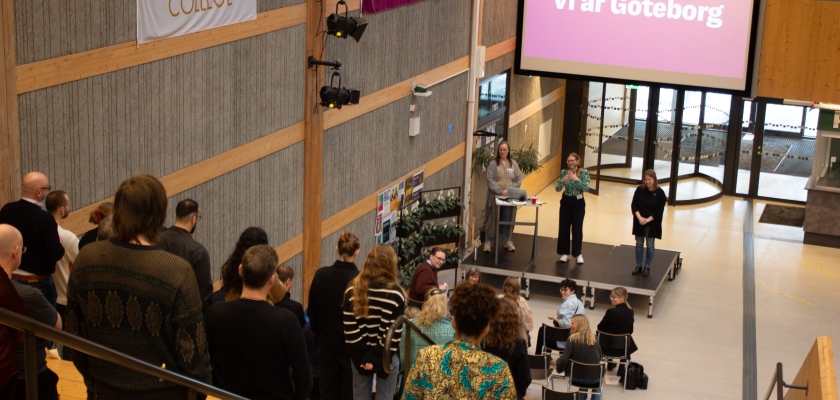
Citizens’ Assembly – A Green & Accessible Gothenburg
City of Gothenburg is conducting its second citizens’ assembly in collaboration with DigiDem Lab, focusing on a greener and more accessible city for all.
Digidem Lab has been commissioned by the City of Gothenburg to plan, organise, and deliver a citizens’ assembly with fifty assembly members, focusing on sustainable urban development. This is the second time the City of Gothenburg is using this method—and the second time Digidem Lab is involved as a partner. The question that the citizens’ assembly will develop recommendations on is:
How do you think we should prioritise the space in Gothenburg’s streets and squares – between city life, greenery and traffic?
What is a citizens’ assembly?
A citizens’ assembly is a democratic process in which a group of randomly selected citizens is tasked with examining a complex societal issue. Participants receive input from experts and relevant stakeholders, deliberate together, and develop joint recommendations. To ensure that citizens’ assemblies are democratically legitimate and robust, they should follow the OECD “Good Practice” principles for deliberative processes.
A green and accessible city – what does it mean?
This year, the theme of City of Gothenburg’s citizens’ assembly is a green and accessible city — but what does that actually mean? It is about how Gothenburg can develop in ways that take into account urban life, public spaces, greenery, commerce, services, and different modes of transport, while also addressing the climate and the city’s climate goals.
Why this question is important right now
Gothenburg is growing rapidly, while the climate crisis places new demands on how we prioritize urban space. The City of Gothenburg has set ambitious goals to become an ecologically sustainable and climate-neutral city by 2030. The citizens’ assembly is one way of giving Gothenburg residents an active role in shaping how this transition will take place.
Who is participating?
In mid-December, 12,000 invitations were sent to Gothenburg citizens aged 16 and over — half by post and half by SMS. From those who registered their interest, fifty participants were selected by lottery based on established demographic criteria: gender, age, city district, income level and type, education level, socio-economic area classification, as well as criteria such as party political affiliation and primary mode of transport during the summer months. The aim is to bring together a broad range of experiences and perspectives — not only those who usually take part in public debates — and to provide participants with the time and support needed to explore the issue together.
How it works – from issue, to recommendations, to change
The starting point is a concrete challenge: urban space is limited and must accommodate urban life, public spaces, greenery, commerce, services, and different modes of transport — all in the context of the climate crisis. The Gothenburg City Environment Committee, responsible for creating accessible, attractive, and vibrant urban and natural spaces, therefore gives a mandate to the citizens’ assembly.
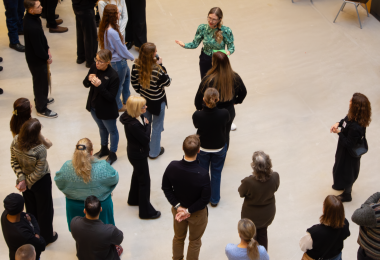
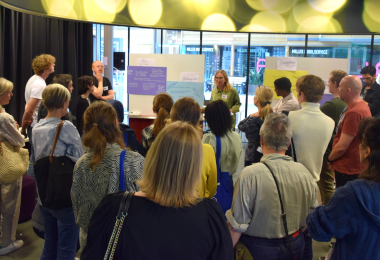
Over four Saturdays in the spring, assembly members meet to receive input from experts, city officials, and witnesses, and to collaboratively develop joint recommendations.
“Citizens’ assemblies are a unique opportunity to deepen democracy by involving residents in decision-making processes. The City of Gothenburg goes further than many other cities by partnering with us to build a process that meets international OECD principles for this type of method,” says Steph Toro, project lead for the process.
Once the assembly has finalized its recommendations, they are handed over to the The Gothenburg City Environment Committee politicians as input for their work. The recommendations may then be implemented either through political processes or as directives to the administration.
Digidem Lab’s Role
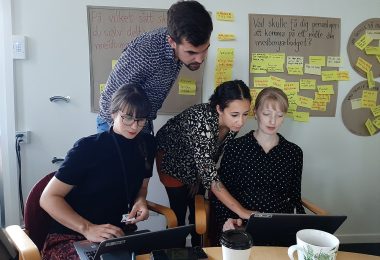
At Digidem Lab, we have had the privilege of designing and facilitating several important citizens’ assemblies, and this is the second one we are conducting with the City of Gothenburg. Based on the OECD “Good Practice” principles for deliberative processes, the assembly is carried out by Digidem Lab in collaboration with Stadsmiljöförvaltningen, Miljöförvaltningen and Demokrati och medborgarservice.
Digidem Lab supports the City of Gothenburg in planning and facilitating the entire process. We are excited that the city invests in this method and believe in the power of bringing together people with diverse experiences to work collaboratively on complex future challenges.
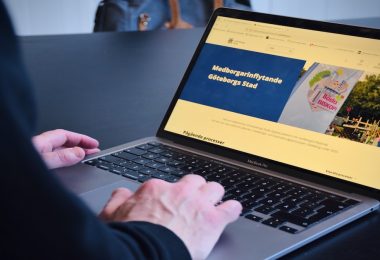
New this year is the addition of a digital solution through the Decidim platform. It allows assembly members to work more transparently between working groups, view each other’s proposals, and vote more efficiently. At the same time, it increases transparency, enabling more Gothenburg residents access to the knowledge from experts shared with the assembly members and later the final recommendations of the assembly memebers. The platform also provides the city with the opportunity to inform the public about how the assembly’s recommendations are implemented.